
Interior solar shades
Solar shades are roller shades made from an open-weave screen fabric that cuts glare and sun on the glass while you still see outside. They suit west- and south-facing rooms, home offices and windows with a view. Sun Blinds measures and installs them across the Bay Area and the Sacramento region; call us or book a free in-home consultation.
Book a free in-home consultation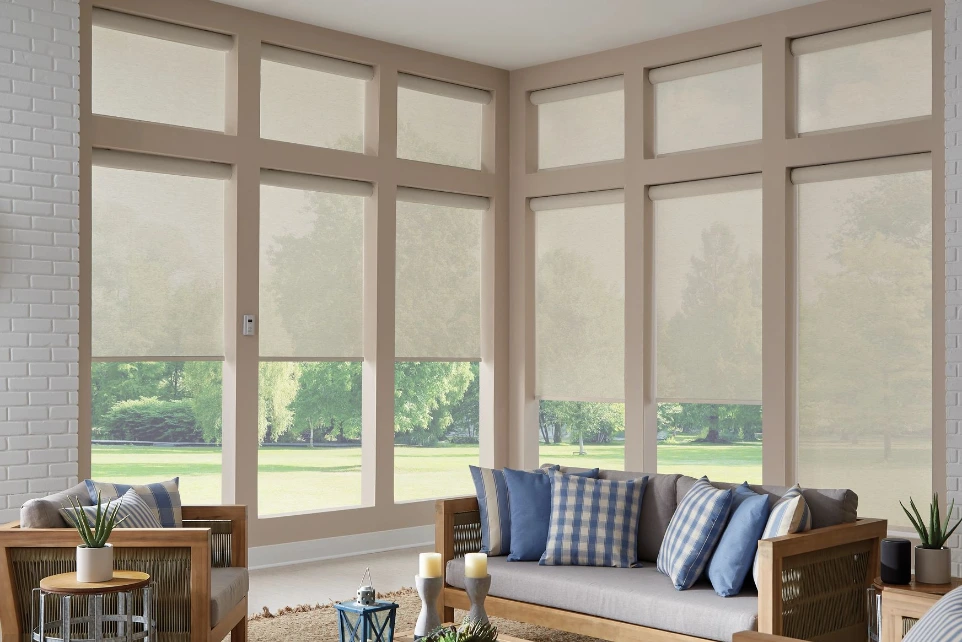
Solar shade styles and options
| Choice | Options | What it changes |
|---|---|---|
| Openness | Tighter or more open weaves | A tighter weave blocks more light and more of the view |
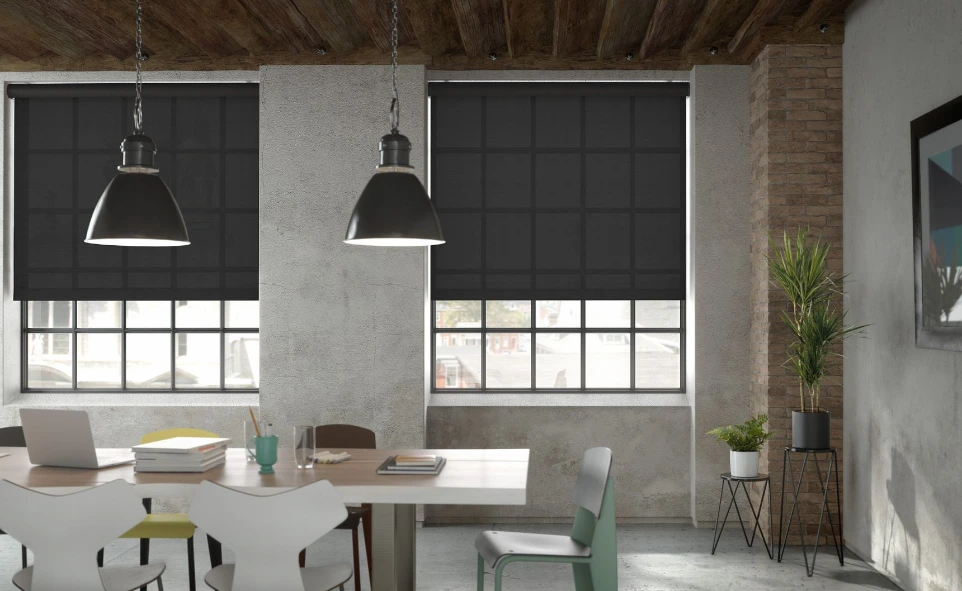
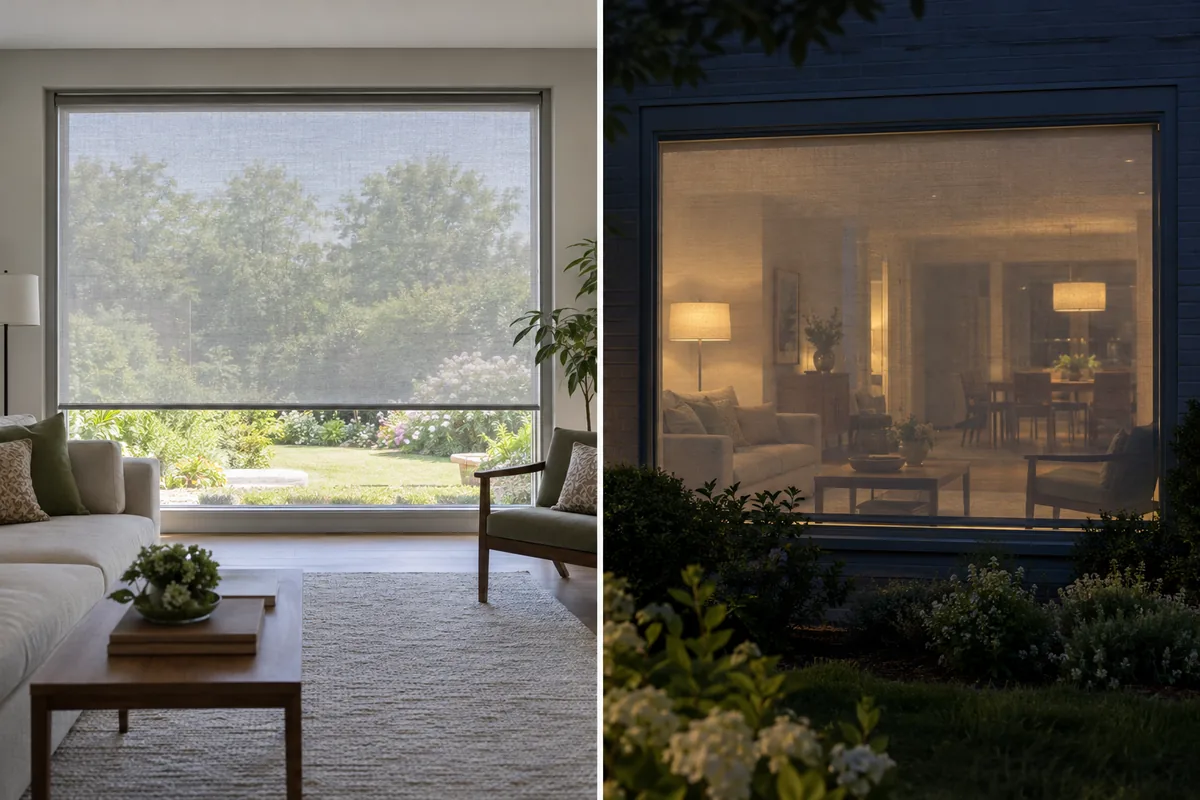
| Color | Dark, mid or light fabric | Darker fabric usually gives a clearer view out; lighter fabric reflects more sun and looks brighter from the street |
| Top | An exposed roll or a cassette | How the head of the window looks |
| Lift | Cordless or motorized | How you raise it, and whether it can follow a schedule |
| Second layer | A room-darkening shade or drapery on the same window | Privacy and darkness at night |
| Inside or outside the house | Interior shades here; exterior solar shades mount outside the glass | Where the sun is stopped |
Rooms and windows where solar shades work
Rooms that take strong afternoon sun are the main fit, such as a west-facing family room in Sacramento's summer heat. The shade softens the glare and the heat on the glass, and the yard stays in sight.
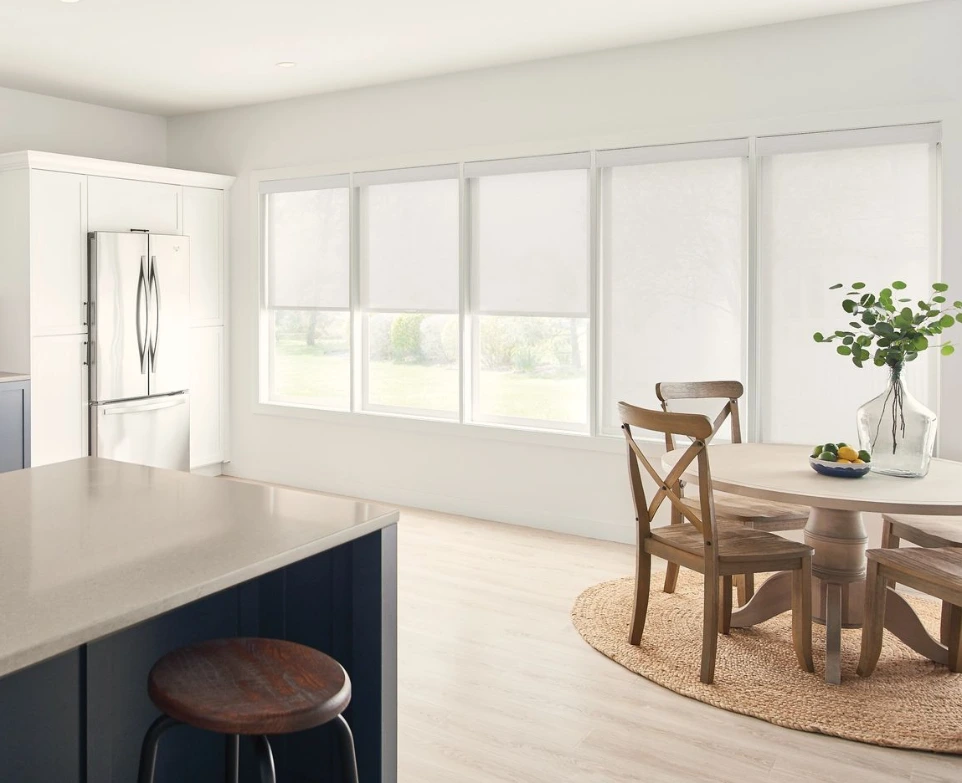
Home offices and TV rooms use them to keep reflections off screens. Kitchens and dining areas that face a garden keep the outlook during the day.
Offices, shops and restaurants use solar shades on long runs of glass, where glare at desks or tables is the complaint.
Where another product does better:
- Night privacy. A solar fabric shows the room after dark, so a bedroom needs a second layer or a roller shade in solid fabric.
- Winter warmth. An open weave holds little air; cellular shades do that job.
- Heat on a hot wall of glass. An exterior solar shade stops the sun before it reaches the window.
How solar shades are operated
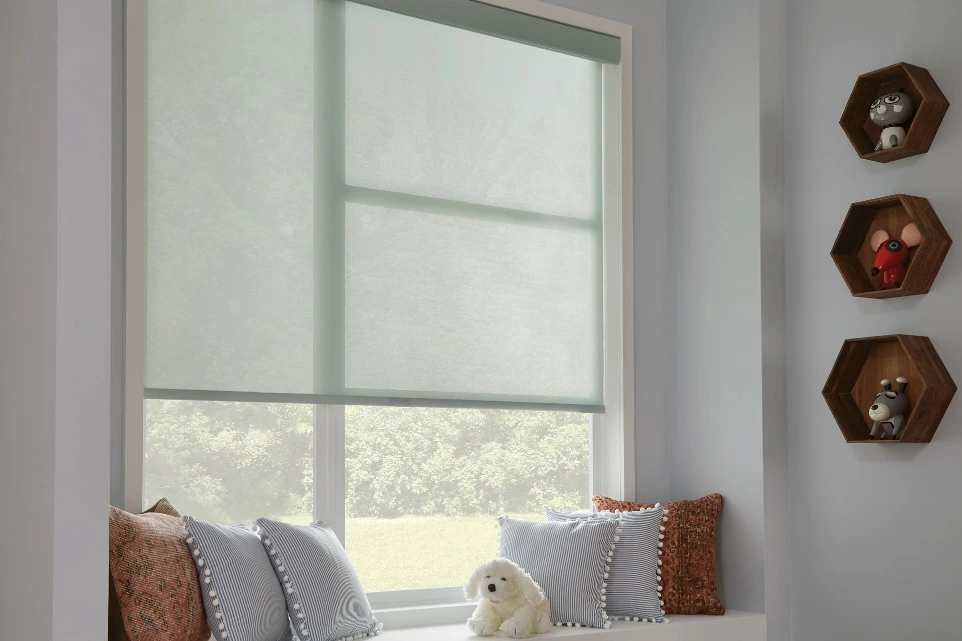
- Cordless: raise and lower by hand from the bottom bar.
- Motorized: a schedule can lower west-facing shades each afternoon and raise them at sunset, with a remote, wall control or app for the rest of the day. Read motorized shades and home automation, Lutron shades and lighting and battery or hardwired shades.
How we measure and install solar shades
- We like to see the windows in daylight. The consultant holds samples of different weaves and colors at the glass so you can compare glare, view and brightness side by side. The Roseville design studio keeps solar samples too, by appointment.
- We note which way each window faces and where screens, TVs and seating sit.
- Each opening is measured, with the frame depth checked for an inside mount and any second layer planned.
- The written quote names the fabric, its openness and color, the lift and the mount for each shade, and every shade is made to those measurements.
- Our installers hang and level the shades, set the lower stop, and show you the lift or the schedule.
What decides the cost of solar shades
- window size and the number of shades;
- the fabric, its openness and its color;
- a cassette or other trim;
- a second layer for night privacy, if the room needs one;
- the lift, and for motorized shades the motor, controls and schedules;
- reach, for tall glass and clerestory windows.
For solar shades beside the rest of the range, see our window coverings cost guide. The guide on what decides the cost of motorized shades covers the motor side.
Where we install solar shades
In the Bay Area, we install solar shades from Fremont to the Peninsula, with motorized solar shades in Sunnyvale, San Mateo and Oakland.
In the Sacramento region, they go into homes in Lincoln and Auburn. In the smaller El Dorado County towns, our records since January 2025 show roller and solar shades as the products chosen most from us.
Farther south, our Central Valley visits cover Stockton, Lathrop and Modesto, where long summers make glare control a common request.
Questions about solar shades
Can people see into the room through solar shades at night?
Yes. After dark, with lights on inside, a solar fabric shows the room to anyone outside, so bedrooms and street-facing rooms need a second layer for the evening.
What does openness mean on a solar shade?
Openness is the share of the weave that is open, given as a percentage. A lower openness blocks more light and more of the view, and the fabric color changes the result too, so compare samples at the window.
Do solar shades block UV light?
They reduce it; how much depends on the fabric's openness and the published data for that exact fabric and color. Ask for that data rather than applying one fabric's rating to another.
Interior or exterior solar shades: which keeps a room cooler?
Exterior shades keep more heat out, because they stop the sun before it reaches the glass. Interior shades are easier to reach and sit out of the wind.
Which solar shade color gives the clearest view out?
Darker colors usually give the clearer view and cut more glare. Lighter colors reflect more sun and look brighter from the street, so samples held at your own window settle the choice.
Related products and guides
- Exterior solar shades, for heat on the outside of the glass
- Roller shades, the solid-fabric version
- Layered shades and sheer shades
- Cellular shades, for insulation
- All window treatments
- For motorized solar shades: battery or hardwired power and motorized shade costs
Phone (510) 556-4233 in the Bay Area or (916) 538-9934 around Sacramento, or send us your address for a solar shade visit.
Facts checked November 2026
Sources: Sun Blinds product information and consultation process (November 2026).
Sun Blinds US, Inc.
California Contractor License #1064155